





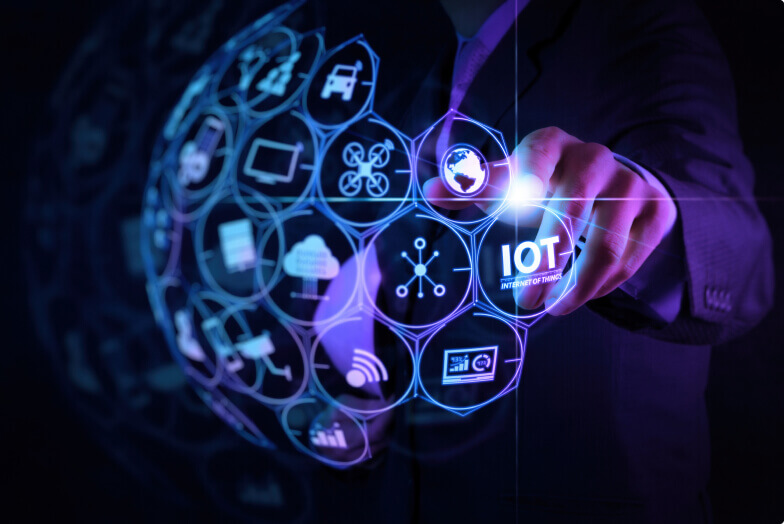
IOT Development Company
IOT App Development Company Providing IOT App Development Services to Global Startups and IOT Development Companies
Request A Quote Now!
CIS, The IoT Solutions Company - Business 4.0 Solutions and smart Solutions
IOT application development company
Internet of things development company - An IOT application development company is a firm that specializes in developing software applications for the Internet of Things. The Internet of Things, or IOT, refers to the growing network of physical objects that are connected to the internet and can share data and perform actions. IOT applications allow these objects to be controlled and monitored remotely. IOT application development companies have expertise in a variety of programming languages and frameworks, such as Java, Node.js, and Python. They also have experience in working with IOT platforms, such as Amazon AWS IoT, Azure IoT Suite, and Google Cloud IoT. IOT application development companies can help you create a custom IOT solution for your business or integrate IOT into your existing software applications. When choosing an IOT application development company, it's important to consider their experience, skills, and portfolio. You should also ask about their development process and whether they offer support and maintenance services. Here are some examples of IOT applications that have been developed by IOT application development companies:
building Smart Home Applications - IOT Apps
Smart home applications allow you to control your home's devices and appliances remotely. You can use your smartphone, tablet, or laptop to turn on the lights, adjust the thermostat, or check the status of your home security system. Smart home applications can also send you notifications if there's a problem, such as a leaky pipe or a broken window.
Smart City Applications - IOT Apps
Smart city applications use IOT to collect data about a city's infrastructure and services. This data can be used to improve the efficiency of city services, such as waste collection and traffic management. Smart city applications can also provide residents with information about their city, such as crime rates and construction projects.
Industrial Applications - IOT Apps
IOT can be used to monitor and control industrial machinery, such as assembly line robots and conveyor belts. IOT can also be used to track inventory levels and to monitor the environment, such as temperature and humidity. Industrial applications can also be used to improve safety by sending alerts if there's a problem, such as a fire or a chemical leak.
Retail Applications - IOT Apps
IOT can be used to track inventory levels and to monitor customer behavior in retail stores. Retail applications can also be used to provide customers with information, such as product availability and special offers. IOT application development companies can help you create custom applications for your business or integrate IOT into your existing software applications. When choosing an IOT application development company, it's important to consider their experience, skills, and portfolio. You should also ask about their development process and whether they offer support and maintenance services.
Internet of things for companies - IOT Apps
Internet of things i.e. IoT has been utilized from enterprises to industries for connecting everything with everyone. IoT can be understood as one of the disruptive technologies which is making the world a better and smarter place to live.
CIS is all set to explore the hidden potential of the Internet of Things for their clients. We deliver innovative IoT solutions to the organizations, which help them fulfill their business requirements. We are here to empower the organizations with:
- Designs, integration, development, management, and deployment of end to end IoT processes.
- Smoothly integrating IoT solutions to the existing architecture of the enterprise.
- Improving decision-making process through augmented intelligence.
- Integrating and transforming the business processes.
- Delivering new data after proper analysis.
IOT app development services
IOT app development company - The development of Internet of Things apps has been on the rise in recent years. This is because IoT apps can offer a wide range of benefits and features to users. Some of the most popular benefits of IoT apps include:
1. Increased Efficiency using IOT App
IoT apps can help to increase the efficiency of various tasks and processes. For example, a smart home app can be used to control the various devices and appliances in your home. This can help you to save time and energy as you won’t need to manually control each device.
2. Improved Communication using IOT App
IoT apps can also improve communication between devices. For example, a smart thermostat can be used to send alerts to your smartphone if the temperature in your home drops below a certain level. This can help you to stay informed and take action if necessary.
3. Enhanced Security using IOT App
IoT apps can also enhance security. For example, a smart home security system can be used to send alerts to your smartphone if there is a security breach. This can help you to take action and prevent any damage or theft.
4. Greater Convenience using IOT App
IoT apps can also offer greater convenience. For example, a smart home app can be used to control the various devices and appliances in your home. This can help you to save time and energy as you won’t need to manually control each device.
5. Reduced Costs using IOT App
IoT apps can also help to reduce costs. For example, a smart thermostat can be used to save energy by automatically adjusting the temperature in your home based on the outside temperature. This can help you to lower your energy bills. IoT apps can offer a wide range of benefits and features to users. If you’re looking for a way to improve the efficiency of your home or business, then an IoT app may be the perfect solution.
Our IoT Approach
Our IoT solutions are all set to deliver smart living standards, smart working conditions at the enterprise level and smartness in the way industries work. CIS approach is not just focused on any single entity, we tap on every single segment that sustains an ability to be transformed into something smart.
-

Consulting and Solution - IOT
- Necessary Induction and analysis
- Delivering business process modeling after technology and process consulting
- Explaining the problem statement with suggestions on solution blueprint
- Enhancement of services and products
-
Intelligent Platforms - IOT
- Open platform for architecture with end-to-end connectivity
- Cost-effective and secure architecture to support IoT resources
- Business intelligence and mashup builder with big data support
- Device virtualization and device vendor agnostic
- Protected, secure, scalable and OTA firmware updates
-
Natural Connected Device - IOT
- Utilizing hardware product design (PCB, Firmware) to deliver end-to-end and quick solutions to the market
- PCB fabrication support with design flow implementation
- Device IoT structure and enabling
- Feature enhancements and certifications
-
Vertical Applications - IOT
- Application development as per user’s demand with cross-platform support and multiple protocols
- Local mobile application development
- Expertise in the vertical domain
- Managing application with simplified import/export of data
- Optimization and re-design including iterative refinement and customer-driven design
-
Testing
- Device field testing - IOT
- Device lab testing (automated/manual)
- Automated application testing
- Platform testing
- Mobile application testing
-
Services & Support - IOT
- Cloud hosting
- Incident management
- L1/L2/L3 support
- Application management
- Remote infrastructure management
- Command center: SoC/NoC


IOT app development - An overview
The Internet of Things (IoT) is a term used to describe a system where physical objects are connected to the internet and can share data. This connection allows the objects to be controlled and monitored remotely. IoT app development is the process of creating applications that can be used to control and monitor these connected devices. IoT app development can be done using a variety of programming languages and frameworks. IoT apps are used to control a wide variety of devices, including: · Home appliances · Thermostats · Lighting · Security systems · Cameras · Wearables · Vehicles
IoT app development allows you to create applications that can be used to control and monitor these devices. IoT app development can be done using a variety of programming languages and frameworks. When developing an IoT app, you will need to consider the following: · Hardware compatibility · Connectivity · Security · User experience
Hardware compatibility - IoT apps need to be compatible with the hardware they will be used on. This includes the operating system, processor, and memory.
Connectivity - IoT apps need to be able to connect to the internet and the devices they will be controlling. This connection can be done using Wi-Fi, Bluetooth, or a wired connection.
Security - IoT app development needs to take security into consideration. This includes ensuring that data is encrypted and that unauthorized access is prevented.
User experience - IoT apps need to have a user-friendly interface. This interface needs to be easy to use and navigate.
IOT software development
IOT software development - Internet of Things (IoT) software development is the process of creating code that will run on IoT devices, which are connected to the internet and can collect, send, and receive data. IoT software development can be used to create applications that can control devices, track data, and provide other services. IoT devices are often small and have limited resources, so IoT software must be designed to be efficient and use as little resources as possible. IoT software must also be designed to be secure, as these devices are often connected to sensitive data. IoT software development can be done using a variety of programming languages and frameworks. The choice of language and framework will depend on the specific requirements of the project. IoT software development is a growing field, as more and more devices are becoming connected to the internet. There are many different applications for IoT software, and the possibilities are endless.
mobile app development company
Mobile app development company - There are many mobile app development companies in the market today. But only a few of them can offer you the best services that you need and deserve. So, how can you find the best mobile app development company that will cater to your specific needs and requirements? Below are some tips that can help you out:
1- Do your research: The first thing that you need to do is to research about the different mobile app development companies in the market. You can check out their websites to know more about their services and portfolio. By doing your research, you can easily narrow down your options and choose the best company that can cater to your specific needs.
2- Check out their portfolio: When you are looking for a mobile app development company, it is important that you check out their portfolio first. This will give you an idea about the quality of their work and their ability to develop high-quality mobile applications.
3- Ask for referrals: If you know someone who has already worked with a particular mobile app development company, then it would be best if you ask for referrals. This way, you can get first-hand information about the quality of their work and their customer service.
4- Read online reviews: Another great way to find the best mobile app development company is to read online reviews. There are many websites that allow customers to post their reviews and feedback about different companies. By reading these reviews, you can easily get an idea about the company’s reputation.
5- Compare prices: Of course, you also need to compare the prices of different mobile app development companies. This way, you can easily find the best deal that suits your budget. By following these tips, you can easily find the best mobile app development company that can cater to your specific needs.
iot development companies
IOT development companies & IOT app development companies - Internet of Things (IoT) development companies are in high demand as businesses and consumers alike seek to take advantage of the benefits of connected devices. By 2020, it is estimated that there will be over 20 billion IoT devices in use worldwide. IoT development companies offer a wide range of services, from strategy and consulting to product development and implementation. They help organizations to develop and launch IoT products and services, and to create and manage IoT ecosystems. There are many factors to consider when choosing an IoT development company. Here are some key considerations: -The company’s experience and expertise in IoT. -The company’s track record in delivering successful IoT projects. -The company’s understanding of your business and your specific IoT needs. -The company’s ability to provide a comprehensive IoT solution, including hardware, software, connectivity, and cloud services. -The company’s pricing model and terms of engagement.
IOT app developers
IOT app developers - The internet of things, or “IoT”, is a term that refers to the interconnectedness of physical devices and objects that are embedded with sensors and software to collect and exchange data. In other words, the internet of things is the network of physical objects that are accessible through the internet. IoT app developers are responsible for creating applications that allow users to interact with these physical objects. IoT app developers must have a strong understanding of both hardware and software development, as well as an understanding of how to connect these two disciplines. IoT app developers must also be able to create applications that are secure and reliable, as the data collected by IoT devices is often sensitive. IoT app developers must have a strong understanding of data security and privacy concerns. IoT app developers must also be able to integrate their applications with other systems and devices. They must be able to troubleshoot and resolve any issues that may arise. IoT app developers must be able to work in a team environment, as they will often be working with other developers, as well as with hardware and software engineers. IoT app developers must be able to communicate effectively, as they will need to be able to explain their ideas and solutions to other team members. IoT app developers must be able to work independently, as they will often be required to work on projects with little to no supervision.
custom software development company
App development, web development, iot software development - In the present business scenario, a large number of companies are opting for custom software development services so as to ensure better efficiency and productivity. This is because custom software development helps companies to get tailor-made software solutions according to their specific business requirements. A custom software development company employs a team of skilled and experienced software developers who work closely with the client company to understand their specific business needs and requirements. Based on this analysis, the developers create a custom software solution that is best suited for the company. There are several benefits of opting for custom software development services. Some of them are listed below:
1- Improved Efficiency: One of the major benefits of custom software development is that it helps to improve the efficiency of a company. By getting tailor-made software solutions according to their specific requirements, companies can save a lot of time and resources which would otherwise be wasted in using inefficient and generic software solutions.
2- Increased Productivity: Another benefit of custom software development is that it leads to increased productivity. By getting software solutions that are best suited to their specific needs, companies can make the most use of their resources and time. This, in turn, helps them to increase their productivity.
3- Cost-effective: Custom software development is also a cost-effective solution for companies. This is because they don’t have to invest in developing and maintaining the software solution on their own. All they need to do is to pay the custom software development company for the development and maintenance of the software solution.
4- Flexibility: Custom software development also provides companies with the much-needed flexibility. This is because the software solution can be easily customized according to the changing needs of the company. This helps the company to stay ahead of its competitors by being able to quickly adapt to the changing market conditions.
5- Competitive Edge: By opting for custom software development services, companies can also gain a competitive edge over their rivals. This is because they will have a software solution that is best suited to their specific business requirements. This will help them to better serve their customers and clients. Thus, it can be seen that there are several benefits of custom software development. Companies that are looking for a cost-effective and efficient way to improve their business efficiency and productivity should definitely opt for custom software development services.
iot solution
-
Smart Assets - IOT
Own smart assets in order to get an edge over the competition and lead to an efficient process by generating profit to your business
-
Smart Operations - IOT
Smart Enterprises would gain high efficiency in business by implementing smart offices and connecting with more people.
-
Smart Manufacturing - IOT
Smart Industries would facilitate sustainable development by tapping into the true potential of the industry.
-
Smart Supply Chain - IOT
Ace the decision making step after analyzing the data gathered by IoT. Also, obtain transparent details on all products from retailer to manufacturer.
-
Smart Facilities - IOT
Integrate smart solutions into the existing ecosystem of the entire chain of Facilities Monitoring & Management with Smart Facilities
-
Smart Experience - IOT
Delivering deeper understanding by providing smart living standards. That would consist of a safer, healthier environment and enhanced quality of life.
-
Smart Sustenance - IOT
We ensure controlled sustenance costs and continuity, with Smart sustentation enabled sustainable & stable operations
-
Smart Connected Products - IOT
The solutions by CSI for connected products can be integrated with multiple platforms, enterprise systems, and historians. This is further helpful in real time asset performance and predictive analysis.


app development company - IOT
An app development company is a business that specializes in creating software applications for mobile devices. There are many app development companies out there, each with their own strengths and weaknesses. It’s important to choose the right one for your project. The first step is to identify your project’s requirements. What kind of app do you need? What platform will it be built for? What features does it need? Once you know the answers to these questions, you can start looking for a company that specializes in the type of app you need. There are many different ways to find an app development company. You can search online, ask for recommendations from friends or colleagues, or look for companies that have been featured in the news or on popular websites. Once you’ve found a few companies that look promising, it’s time to do your research. Read online reviews and check out the company’s website and social media accounts. See what other clients have said about their experience working with the company. Once you’ve narrowed down your options, it’s time to contact the companies and request quotes. Be sure to ask about their experience, their process, and their pricing. Finally, you’ll need to decide which company to work with. Choose the one that you feel confident will be able to meet your needs and deliver a high-quality product.
IOT development company
Internet of Things is a network of physical objects that are embedded with sensors, software, and other technologies for the purpose of connecting and exchanging data with other devices and systems over the Internet. IoT development company helps you to create such applications and systems. They have a team of experienced developers who have in-depth knowledge of the latest IoT trends and technologies. They will work with you to understand your requirements and then create a custom solution that meets your needs. Some of the services offered by an IoT development company include:
- Connectivity Solutions: They offer solutions that help you connect your devices and systems to the Internet. This includes both wired and wireless solutions.
- Data Management Solutions: They offer solutions that help you manage and store the data generated by your IoT devices. This includes both on-premises and cloud-based solutions.
- Device Management Solutions: They offer solutions that help you manage and control your IoT devices. This includes both on-premises and cloud-based solutions.
- Analytics Solutions: They offer solutions that help you analyze the data generated by your IoT devices. This includes both on-premises and cloud-based solutions.
- Security Solutions: They offer solutions that help you secure your IoT devices and data. This includes both on-premises and cloud-based solutions.
An IoT development company can help you create a comprehensive IoT solution that meets your specific needs. Contact one today to get started.
IOT developers
IoT developers are responsible for developing and managing the hardware and software for internet-connected devices, also known as “the internet of things” (IoT). This can include everything from connected cars and wearable devices to smart home appliances and industrial equipment. IoT developers typically have a background in computer science or engineering, and they use this knowledge to design and develop IoT solutions that are secure, reliable, and user-friendly. They must also be able to work with a variety of stakeholders, including product managers, designers, and manufacturers, to ensure that their solutions are successfully integrated into the final product. IoT developers need to have a strong understanding of networking and communication protocols, as well as experience with embedded systems and software development. They should also be familiar with various IoT platforms and be able to select the best one for a given project. IoT solutions must be designed with security in mind from the outset, as devices are often collecting sensitive data. IoT developers need to be aware of the latest security threats and how to mitigate them. They should also have a good understanding of privacy laws and regulations, as well as how to protect the data collected by IoT devices. IoT developers need to be able to work in a fast-paced and ever-changing environment, as the IoT landscape is constantly evolving. They should be comfortable with ambiguity and be able to rapidly prototype and iterate on their designs. If you’re interested in becoming an IoT developer, you should consider pursuing a degree in computer science or engineering. Alternatively, there are many online courses and bootcamps that can teach you the skills you need.
IOT applications
IoT Applications: The Internet of Things (IoT) is a system of physical objects, devices, vehicles, buildings and other items that are embedded with electronics, software, sensors, and network connectivity that enable them to collect and exchange data. The IoT enables objects to be connected and controlled remotely across existing network infrastructure, creating opportunities for more direct integration between the physical world and computer-based systems, and resulting in improved efficiency, accuracy and economic benefits. IoT applications can be used in a variety of industries and settings, including:
- Connected cars: Vehicle performance and diagnostics data can be transmitted to manufacturers and dealerships to improve customer service and maintenance scheduling. Additionally, driver behavior data can be used by insurance companies to create more personalized policies.
- Connected homes: Homeowners can remotely monitor and control energy use, lighting, security systems and other household devices. This can lead to reduced energy costs, increased security and greater convenience.
- Connected factories: Factory machines can be equipped with sensors that transmit data on equipment performance and usage. This data can be used to improve maintenance scheduling, identify potential issues and optimize production.
- Connected cities: Smart city applications can help municipalities to improve the efficiency of city services, such as waste collection and management, traffic control and energy use.
- Connected healthcare: Remote patient monitoring can allow healthcare providers to collect data on patients’ health status and vital signs. This data can be used to improve the quality and efficiency of patient care. The IoT is expected to have a significant impact on the economy and society.
McKinsey Global Institute estimates that the IoT could have an economic impact of up to $11 trillion per year by 2025.
mobile app development
A mobile app is a software application developed specifically for use on small, portable electronic devices such as smartphones and tablets. The global market for mobile apps is growing rapidly. In 2015, there were an estimated 1.6 billion active app users across the world, and this is projected to increase to 2.7 billion by 2021. The majority of app users are located in North America and Asia-Pacific, but the number of users in other regions is growing. The most popular category of mobile apps is games, followed by entertainment, lifestyle, and productivity. However, there is growing demand for apps in other categories such as education, health, and finance. The development of a mobile app requires expertise in a number of different areas. The first step is to determine the purpose of the app and the target audience. Once this has been established, the app can be designed and developed. The user interface (UI) and user experience (UX) are crucial to the success of a mobile app, so it is important to get these right. The app must then be tested to ensure that it works correctly on all devices and platforms. Once it has been launched, it is important to monitor its performance and make any necessary updates. Mobile app development is a complex process, but it can be extremely rewarding. Creating an app that is successful can lead to financial rewards and international recognition.
IOT application development
IoT Applications Development: The Internet of Things (IoT) is a growing network of physical objects that are connected to the Internet. These objects are equipped with sensors and actuators that allow them to collect and exchange data. IoT applications development is the process of creating applications that can take advantage of this network of connected objects. These applications can range from simple monitoring and control applications to more complex applications that use data from the IoT network to make decisions and take actions. IoT applications development requires a good understanding of the IoT platform and the underlying hardware and software. In addition, developers need to be familiar with the protocols and standards that are used to communicate with the various devices in the IoT network. IoT applications can be developed using a variety of programming languages and tools. However, it is important to choose the right language and tool for the specific application. IoT applications can be developed for a variety of platforms, including:
- Smartphones, Tablets, Web browsers, Embedded systems
- IoT applications can be developed using a variety of programming languages, including: C, C++, Java, Python, Node.js
- IoT applications can be developed using a variety of tools, including: IoT platforms, IoT SDKs, IoT IDEs, IoT simulators, IoT debuggers, IoT profilers
- IoT applications can be deployed on a variety of devices, including: Smartphones, Tablets, Embedded systems, IoT gateways, IoT routers, IoT switches, IoT sensors, IoT actuators
- IoT applications can be deployed on a variety of networks, including: Local area networks (LANs), Wide area networks (WANs), Wireless networks
- IoT applications can be deployed on a variety of cloud platforms, including: Amazon Web Services (AWS), Google Cloud Platform (GCP), Microsoft Azure
- IoT applications can be deployed on a variety of edge devices, including: IoT gateways, IoT routers, IoT switches, IoT sensors, IoT actuators
- IoT applications can be developed using a variety of development methodologies, including: Agile, Lean, Waterfall
- IoT applications can be developed using a variety of testing methodologies, including: Unit testing, Integration testing, System testing, Acceptance testing
- IoT applications can be developed using a variety of DevOps tools, including: Continuous integration (CI), Continuous delivery (CD), Continuous deployment (CD)
- IoT applications can be developed using a variety of security methodologies, including: Authentication, Authorization, Encryption
- IoT applications can be developed using a variety of privacy methodologies, including: Anonymization, Pseudonymization
- IoT applications can be developed using a variety of compliance methodologies, including: SOX, HIPAA, GDPR
IOT development services
The Internet of Things, or IoT, is a system of interconnected devices and sensors that can collect and exchange data. IoT development services can help you create applications and devices that can take advantage of this data to improve efficiency, safety, and productivity. IoT development services can help you create applications that can monitor and manage devices and sensors, collect and analyze data, and provide insights that can improve efficiency and productivity. IoT applications can also help you create safety and security systems that can monitor for potential threats and provide alerts. IoT development services can help you create devices that can collect data from sensors and other devices, and exchange data with other devices and applications. IoT devices can be used to monitor and manage assets, track inventory, and control equipment. IoT devices can also be used to collect data about the environment, such as temperature, humidity, and air quality. IoT development services can help you create applications that can control and manage devices, exchange data, and provide insights. IoT applications can be used to monitor and manage assets, track inventory, and control equipment. IoT applications can also be used to collect data about the environment, such as temperature, humidity, and air quality.
Industry Solution- iot app development services
Industry Solutions by internet of things development company


Internet of Things Solutions
What Is the Internet Of Things?
The Internet of Things (IoT) is a system of interrelated computing devices, mechanical and digital machines, objects, animals or people that are provided with unique identifiers (UIDs) and the ability to transfer data over a network without requiring human-to-human or human-to-computer interaction. The term “Internet of Things” was first coined by Kevin Ashton in 1999. He was then working on a project at Procter & Gamble that involved connecting RFID tags to objects in order to track them throughout the supply chain. The idea was that if each object could be given a unique identifier and connected to the internet, then it could be tracked and managed throughout its life cycle, from manufacture to disposal. The term “Internet of Things” has since been used to describe a variety of different concepts and technologies, and its meaning has evolved over time. In general, however, the term is used to refer to the trend of increasing connectivity between devices and systems. The IoT is made up of a variety of different technologies and devices, including but not limited to:
-RFID tags and readers -Sensors -Wi-Fi -Bluetooth -Zigbee -Near Field Communication (NFC)
The IoT is still in its early stages of development, and there is no single “standard” for how devices and systems should be connected. This lack of standardization is one of the biggest challenges facing the IoT today. The IoT has the potential to revolutionize a wide range of industries, from healthcare to manufacturing to transportation. By connecting devices and systems, the IoT has the potential to increase efficiency, optimize resources, and improve safety. The healthcare industry is one of the most promising sectors for the IoT. The IoT has the potential to transform healthcare by providing real-time data and insights that can improve patient care. The IoT can also help manufacturers increase efficiency and optimize production. By connecting machines and devices, the IoT can provide data that can be used to improve the manufacturing process. The transportation sector is another area where the IoT can have a significant impact. The IoT can help to improve traffic management and safety. By connecting vehicles and infrastructure, the IoT can provide data that can help to reduce traffic congestion and accidents.
Case Studies



Client Success
-
Nicolas
...
I’ve outsourced my joomla CMS website development project to Cyber Infrastructure, CIS, I would just like to thank you for the good work you did. It was really efficient and understanding all the things we need, really great. We will come back for
Ghio
Lemmer, Netherlands
I am glad to write a review for your capable team, you have onboard and I would like to mention another thing that your technology team is good for your company. Thanks for everything. Soon we'll be outsourcing more projects to you.
Paul
...
I’ve hired CISIN a while ago and I want to say that thanks for your help, everything is great & much appreciated. I’m always open to any design upgrades you may like to punt in future so feel free. I wish you peace & success in every sphere, thanks again.
-
Simon
...
I am a Research Director for a company in the UK which monitors company’s customer service and provides feedback on their performance and shows benchmarking data for their continual improvement. With that background I am pleased to say that the customer service I received from you just now was excellent!
JimMc
Scotland, United Kingdom
Super Work The application is better than I expected it to be. This was quite a fluid arrangement as I was not totally sure what I required, Abhi and the rest of his team were very patient and discussed all aspects of the project with me. Any changes I requested
Leonard
North Carolina, United States
Did a great job, and in time asked for it. The Parental control application I was looking at was a single module in the final product. Very innovative with ideas and implementations. Thanks!
-
David
United Kingdom
Very diligent and hard-working. When given sufficient information, we were able to produce a good-quality product in a quick time. Would use them again.
Rossk
New York, United States
Outstanding work even with some of the last minute changes they coded the program changes without any problems.
Mike
Georgia, United States
Amit and team did a superb job, and did much more than they were required. Communication is very professional. Recommend these guys every time. I will use it again.
-
Mark
Florida, United States
Superb Communication will go the extra mile to please and best of all the quality of code is excellent! Thanks CIS!
Russell
Australia
A+ coding yet again. CIS is quick to respond to bugs and even quicker to fix them. I really enjoy the professionalism and dedication of this team!
RonnieO
Illinois, United States
CIS did an excellent job on my project. I gave them a week to get it done and they got it done within 1 day! They are very knowledgeable and easy to get in touch with. I definitely plan to use them in the future.
-
Rick
United Kingdom
Wow, that took a long time and was complicated! Cis team did a good job in the end and thanks for your work.
Jean-Luc
Antwerp,Belgium
Thanks! This is only the start. We are bound to do great things together.
Nicolas
...
I’ve outsourced my joomla CMS website development project to Cyber Infrastructure, CIS, I would just like to thank you for the good work you did. It was really efficient and understanding all the things we need, really great. We will come back for